


Introduction
Most companies don’t notice the problem right away. In the early stages of a business, technology usually feels like a big improvement. A CRM organizes customer information, accounting software tracks finances, and project tools help teams coordinate work. Compared to spreadsheets and email threads, everything suddenly feels more structured.
For a while, those tools do exactly what they were meant to do. But something subtle tends to happen as the business grows. The systems that once simplified work start adding friction instead.
It’s not because the software itself is bad. In many cases the tools are still excellent. The issue is that the company has changed, while the technology setup hasn’t kept pace. At Minterminds, this is something we see quite often when working with growing teams.
Growth Changes How Work Actually Happens
When a company is small, processes are flexible. People talk directly, decisions happen quickly, and information moves informally between departments. As the team expands, that flexibility becomes harder to maintain.
New employees join. Responsibilities become more specialized. Data starts moving through several departments before a task is complete. Suddenly the simple tools that worked well for a team of five have to support a team of thirty or fifty.
That’s when the gaps begin to show. Reports don’t line up perfectly anymore. Customer information lives in multiple places. Teams start asking each other which numbers are correct. None of this happens overnight, but the friction slowly builds.
Workarounds Become Part of the Routine
When technology doesn’t quite match the way a company operates, people adapt. Someone exports data to a spreadsheet because it’s easier to analyze there. Another employee keeps a separate tracker just to double-check the numbers coming from the system.
These solutions make sense in the moment. They help the team keep moving. But over time they create a different problem. Instead of one reliable system, the organization ends up with several unofficial ones. Data gets copied, adjusted, and rechecked in multiple places. Eventually the team spends more energy managing information than using it.
When Systems Don’t Talk to Each Other
Another common challenge appears when companies start using several different tools at once. A sales platform manages leads. Accounting software handles billing. Marketing systems track campaigns and customer engagement. Individually, each platform performs its job well.
The difficulty appears when information needs to move between them. Without proper integration, employees become the connection between systems. They transfer information manually, update records in multiple places, and double-check reports before sharing them with leadership. This process doesn’t feel dramatic, but it quietly consumes time every day.
Why Integration Often Solves the Real Problem
Many businesses assume the solution is to add another tool. If reporting feels slow, they install a new analytics platform. If workflows feel complicated, they experiment with additional automation software.
Sometimes these additions help, but often they increase complexity. In many cases, the real improvement comes from making existing systems work together properly.
When platforms share data automatically, teams stop worrying about whether numbers match. Updates appear instantly across systems, and employees no longer need to transfer information manually. The difference may seem small at first, but it changes the rhythm of everyday work.
Technology Should Reflect the Way a Business Operates
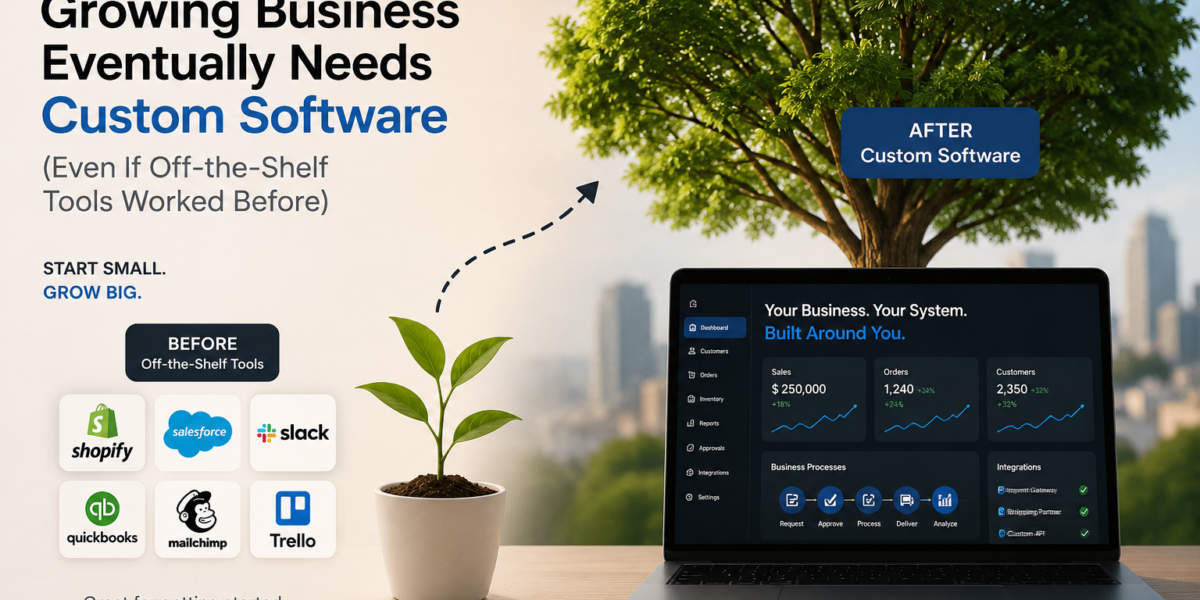
One of the reasons companies eventually consider custom digital solutions is that every organization develops its own way of working. Two businesses in the same industry can have completely different internal structures, approval processes, and reporting priorities.
Generic software rarely captures those differences perfectly. Custom systems, on the other hand, can be designed around the company’s actual workflows. Instead of forcing employees to adjust their work to match the software, the system adapts to the organization.
At Minterminds, that approach often begins with understanding how teams really operate on a daily basis. Not how processes look in documentation, but how work actually moves across the company.
Simpler Systems Often Work Better
One interesting pattern we’ve seen is that the most effective digital systems are rarely the most complex. They’re the ones that remove unnecessary steps.
Employees don’t have to jump between five platforms to finish a task. Data doesn’t need to be copied between tools. Reports appear automatically without several layers of manual preparation. From the outside, these improvements may not look dramatic. But inside the organization, they make work noticeably smoother.
Looking Ahead
Technology will continue to evolve quickly. New platforms appear every year, each promising better automation, deeper insights, or smarter decision-making. But tools alone don’t improve operations.
The real advantage comes when systems support the way a business actually works. For many growing companies, that means stepping back and looking at how information flows across the organization. Once those connections are clear, technology can finally do what it was meant to do. Make work easier instead of more complicated.