

Introduction
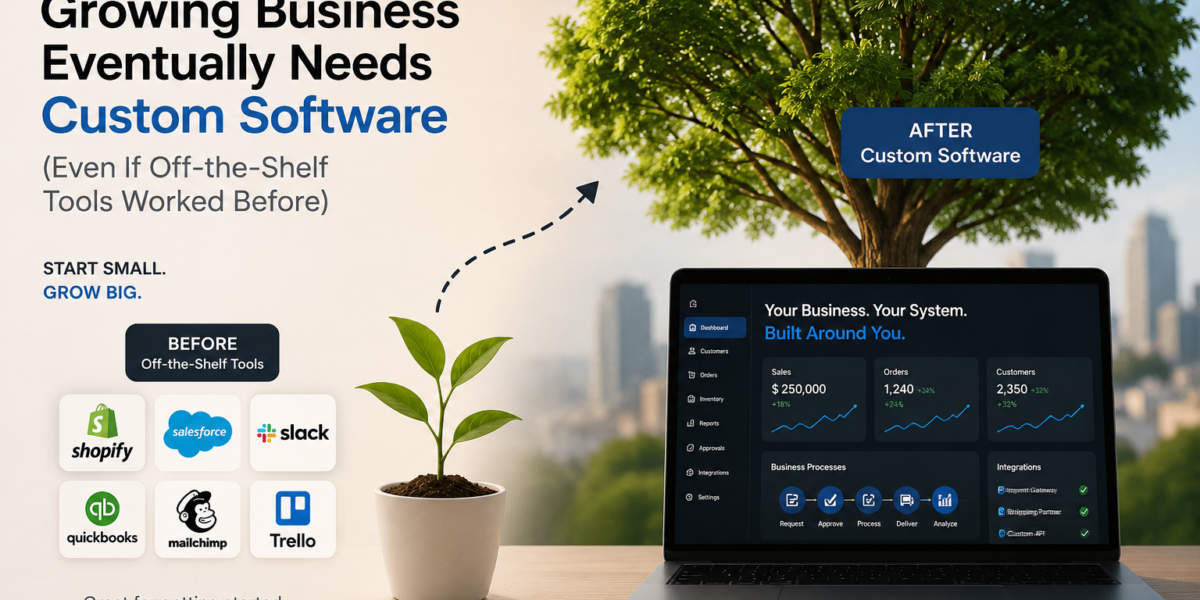
In the early days of a business, off-the-shelf tools work surprisingly well. A CRM manages customers. A project tool organizes tasks.
Accounting software tracks invoices. For a while, everything feels manageable. Teams adopt the tools quickly, workflows take shape, and operations begin to run more smoothly.
But as the business grows, something slowly begins to change. The tools that once simplified work start creating friction.
Not because the software is bad, but because the business itself has evolved. At Minterminds, we see this transition often. Companies reach a stage where generic tools no longer match the way they actually operate. That’s usually the moment when custom software becomes necessary.
Generic Tools Are Designed for Average Workflows
Most business software is built to serve thousands of companies at once. To make that possible, these tools rely on standardized workflows. The goal is to support the most common business processes without needing heavy customization. For smaller organizations, this works well. Their operations are still flexible enough to adapt to the structure of the software.
But growing companies tend to develop unique workflows. Different approval structures. Specialized reporting needs. Internal systems that connect several departments.
Eventually, the “average workflow” inside generic software stops matching the reality of the business. That mismatch creates inefficiencies that weren’t visible earlier.
Workarounds Start Appearing Everywhere
One of the clearest signs that a company has outgrown its tools is the rise of workarounds. Someone exports data to a spreadsheet because the built-in report doesn’t show the right metrics.
Another team member manually copies information between platforms because the systems don’t sync properly. Departments maintain separate records just to make sure their numbers stay accurate.
None of these actions seem dramatic on their own. But together, they introduce delays, inconsistencies, and unnecessary effort. Instead of supporting productivity, technology begins to slow things down.
Integration Becomes More Difficult Over Time
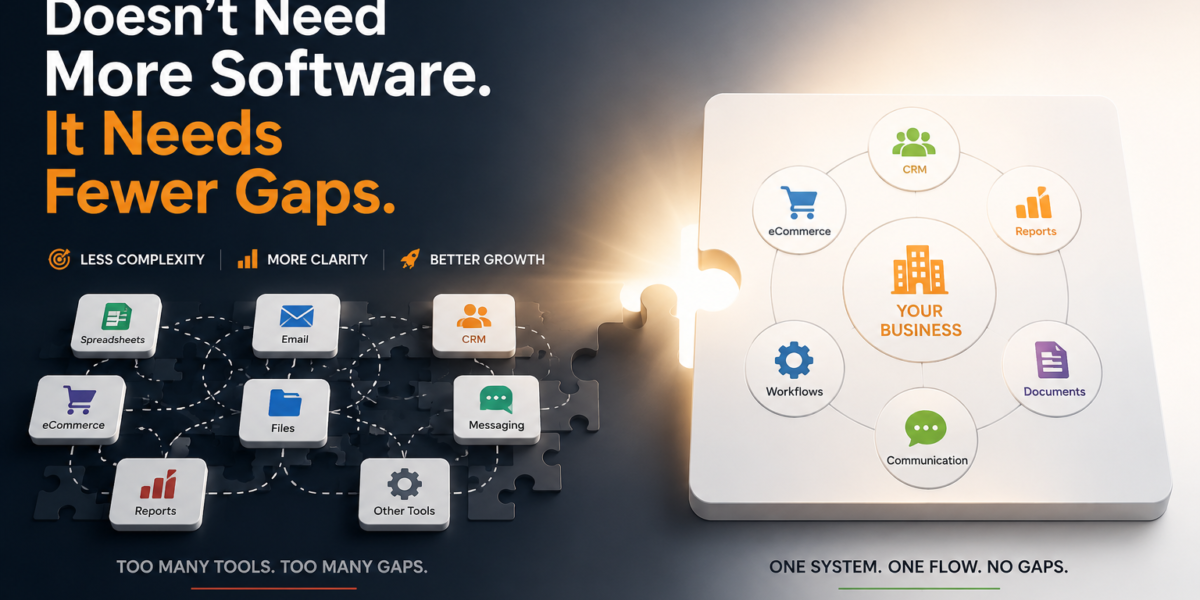
As businesses grow, their technology stack usually expands as well. A company that once relied on two or three tools may now operate with ten or more platforms across sales, finance, marketing, and operations.
If these systems aren’t designed to work together, employees end up bridging the gaps manually. Data has to be moved. Reports need verification.
Teams double-check numbers before making decisions. This situation becomes particularly challenging when leadership needs a clear overview of business performance.
Without connected systems, gathering reliable insights takes far longer than it should. Custom software often solves this problem by acting as a bridge between existing tools.
Custom Systems Reflect How Businesses Actually Work
One of the biggest advantages of custom development is flexibility. Instead of forcing teams to adjust their processes around software limitations, the system is designed to support the company’s real workflows.
This means:
Approval processes can mirror the organization’s structure. Dashboards can focus on metrics that genuinely matter. Different systems can share data automatically instead of requiring manual updates. At Minterminds, this approach often begins with understanding how the business truly operates rather than simply adding new technology.
Sometimes the goal is not to build a large platform but to create a solution that removes friction from daily operations.
Better Systems Lead to Better Decisions
When technology aligns with the way a business functions, decision-making becomes easier. Leaders can access reliable data without waiting for manual reports. Teams trust the numbers they see because the information comes from a single integrated system.
Processes become predictable instead of reactive. These improvements may not always be visible from the outside, but they have a significant impact on how efficiently a company grows.
Custom Software Is About Long-Term Stability
Some organizations hesitate to invest in custom development because they assume it will be complex or expensive.
In reality, many companies eventually spend more time and money managing inefficient tools than they would on building a tailored system. Custom software doesn’t need to replace everything at once.
Often it evolves gradually, solving one operational challenge at a time while connecting existing tools more effectively. This approach allows businesses to scale their systems alongside their growth.
Technology Should Support Growth, Not Limit It
As organizations expand, the complexity of their operations naturally increases. More employees join the team. Customer expectations rise. Processes become more specialized.
Technology should make this growth easier to manage. But when systems stop matching how a business actually works, they can become obstacles instead of solutions. That’s why many companies eventually move toward custom digital systems that reflect their unique operations.
Final Thoughts
Off-the-shelf tools are valuable in the early stages of a business. They provide quick solutions and help teams organize their work. But as organizations grow, their needs become more specific.
At that point, technology must evolve as well. Custom software allows businesses to build systems that support real workflows, connect existing platforms, and provide clearer insights into operations.
At Minterminds, the goal isn’t simply to create new software. It’s to design digital systems that grow with the businesses that rely on them.