


Introduction
When a digital project doesn’t work out, most people blame money. “Budget wasn’t enough.” “We should’ve invested more.” “We rushed it.”
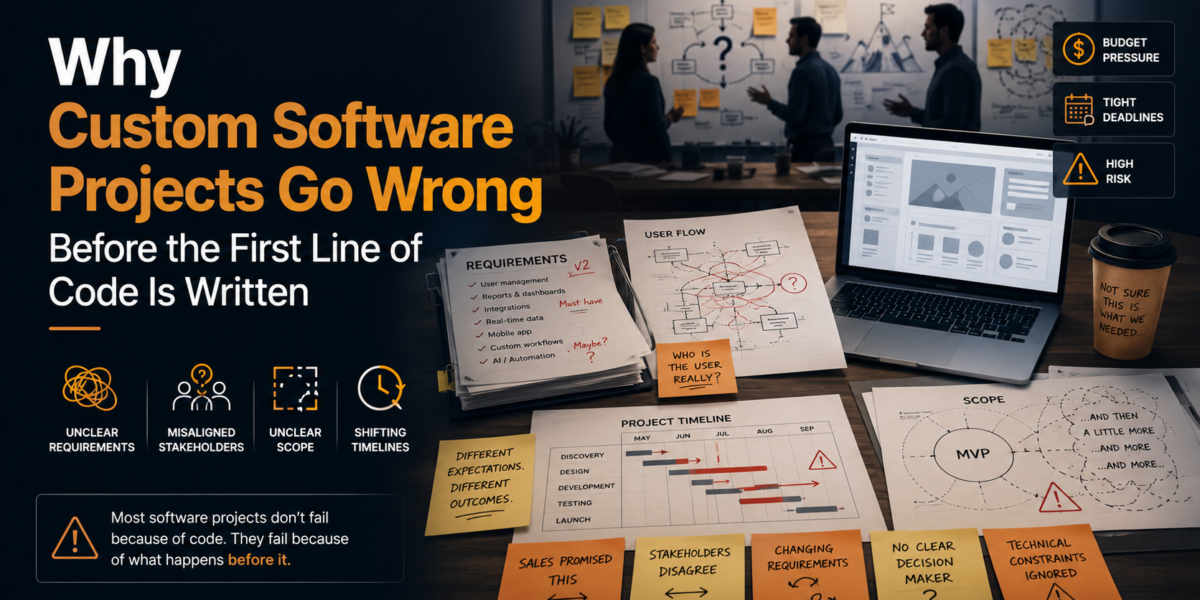
But if you sit inside enough growing companies, you start seeing a different pattern. The problem usually isn’t budget. It’s clarity.
At Minterminds, we’ve seen projects with large budgets stall. And smaller ones succeed smoothly. The difference isn’t how much was spent. It’s whether the business knew exactly what it was solving.
Most Companies Jump to Solutions Too Fast
A business feels pressure. Operations are slow. Customers are complaining. Data is scattered. The immediate instinct?
“Let’s build an app.” “Let’s upgrade the system.” “Let’s automate everything.” It feels proactive.
But without stepping back, new software just layers over the same confusion. The workflow is still unclear. Departments still operate in silos. Data logic still isn’t aligned. Now there’s just a newer interface on top of old problems.
Technology Doesn’t Fix Unclear Processes
This is where many digital projects quietly fail. If a process isn’t clearly defined offline, automating it won’t fix it. It will just automate confusion.
For example:
- If approval flows change depending on who’s available, building a rigid system creates friction.
- If reporting metrics aren’t agreed upon internally, dashboards won’t solve disagreements.
- If teams don’t align on data ownership, integration will still produce inconsistencies.
At Minterminds, most early conversations aren’t about features. They’re about questions. What actually happens when an order comes in? Who touches the data? Where does it slow down? Why? Until that’s clear, building anything is risky.
Custom Software Works When It Reflects Reality
There’s a difference between building something impressive and building something usable. A complex system with endless features might look powerful. But if teams struggle to use it daily, it becomes another obstacle.
The strongest digital systems are usually the simplest ones. They reflect real workflows. They remove unnecessary steps. They don’t try to be everything at once.
At Minterminds, custom development often focuses on the core friction points instead of building giant platforms. Sometimes that means improving integration. Sometimes it means redesigning internal dashboards. Sometimes it means removing tools instead of adding them.
The Hidden Risk of Scaling on Weak Systems
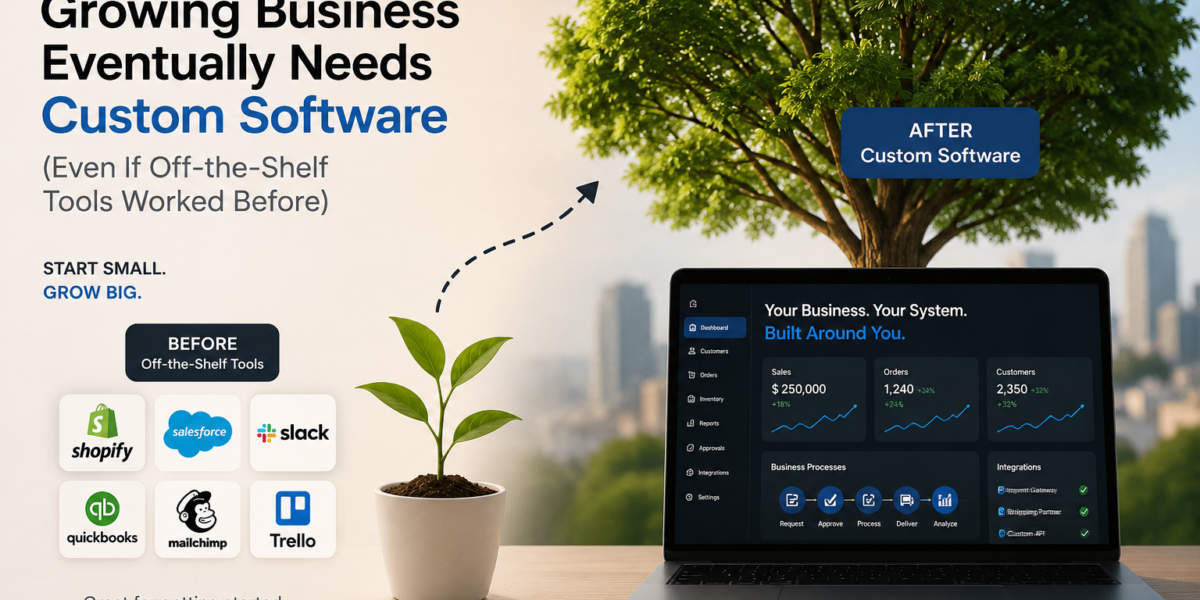
Early-stage growth can hide system weaknesses. When volume is low, manual fixes work fine. But as scale increases, cracks widen. More customers mean more data.
More employees mean more coordination. More transactions mean more room for error. Without solid digital foundations, growth starts feeling chaotic. Teams spend time correcting mistakes instead of moving forward. That’s usually when businesses realise something deeper needs attention.
Integration Often Solves More Than Innovation
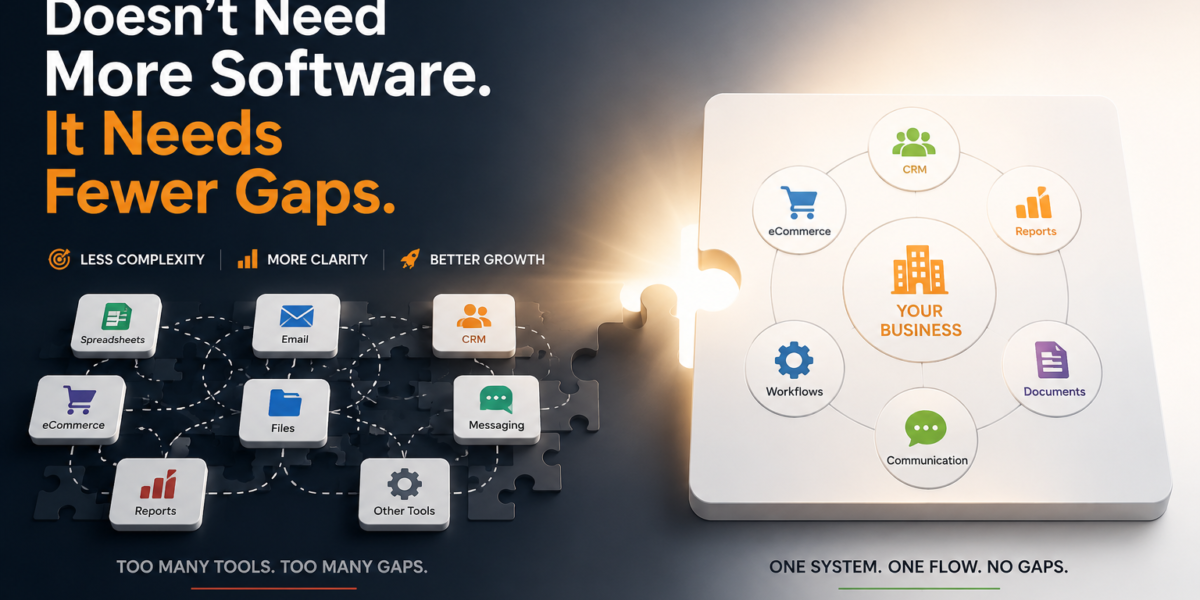
There’s a lot of focus today on innovation. AI, automation, new platforms. But often, the biggest improvement comes from something simpler: systems talking to each other properly.
When sales updates billing automatically, delays disappear. When inventory syncs in real time, errors reduce. When reports pull from one reliable source, meetings get shorter.
Integration doesn’t look exciting in a presentation. But it changes everyday operations immediately.At Minterminds, integration is rarely treated as an afterthought. It’s usually the backbone.
AI Only Helps When Foundations Are Strong
Artificial intelligence is powerful. But layered on top of messy systems, it spreads inconsistency faster. If data is inaccurate, AI predictions will be inaccurate. If workflows are unclear, automation creates confusion. AI works best when systems are already structured properly.
Then it can:
- Identify patterns.
- Reduce repetitive tasks.
- Improve forecasting.
- Used thoughtfully, it supports growth.
- Used prematurely, it amplifies disorder.
Digital Success Is Usually Quiet
When a digital project truly works, there isn’t a dramatic celebration.
Instead, things just feel smoother. Fewer late-night corrections. Fewer cross-team conflicts about numbers. Faster decision-making. The system works quietly in the background. That’s usually the sign it was built correctly.
At Minterminds, that’s the goal. Not flashy launches. Sustainable structure.
Final Thought
Digital projects don’t fail because businesses lack ambition. They fail because clarity was missing at the start. Before building anything, it’s worth asking: What exactly is broken? Why is it broken?
What would “working smoothly” actually look like? Once that’s clear, technology becomes a solution instead of a guess. Strong digital systems don’t just improve operations.
They make growth feel manageable. And that’s usually what businesses are really looking for.