

One of the biggest misconceptions in business technology is that system problems are obvious.
People imagine failure as something dramatic.
A server crash.
A platform outage.
A major technical breakdown.
But in reality, most operational systems don’t fail like that.
They fail quietly.
And because the failure is gradual, businesses often don’t notice it until growth itself starts feeling harder.
In The Beginning, Everything Feels Manageable
Early-stage businesses can operate with surprisingly simple systems.
A few tools.
Some manual coordination.
A couple of spreadsheets.
And honestly, it works.
Small teams compensate naturally.
Communication is direct.
Processes stay flexible.
At this stage, speed comes from proximity. Everyone knows what’s happening, so inefficiencies stay hidden.
That’s why many companies assume their systems are “good enough.”
At first, they usually are.
Growth Changes The Nature Of Work
The challenge begins when the business starts scaling.
More customers mean more transactions.
More employees mean more dependencies.
More workflows mean more complexity.
And suddenly, the same processes that once felt manageable start creating friction.
Tasks require more coordination.
Approvals slow things down.
Data begins existing in multiple places.
Nothing breaks.
But everything takes longer.
The Team Starts Carrying The Weight Of The System
This is usually the first real sign of system failure.
People start compensating manually.
Someone keeps a backup spreadsheet.
Someone double-checks reports before meetings.
Someone sends “just confirming” messages before every next step.
Individually, these things feel harmless.
Collectively, they become operational drag.
And the dangerous part is that businesses often mistake this extra effort for normal growth pressure.
It isn’t.
It’s the team carrying the weight of systems that no longer scale properly.
Why Most Bottlenecks Aren’t Technical
Interestingly, many slowdowns aren’t caused by technology limitations themselves.
The tools often work fine.
The issue is usually structural.
How systems communicate.
How workflows transition between departments.
How data moves across platforms.
When these flows aren’t designed properly, businesses create invisible bottlenecks.
Information gets delayed.
Approvals stack up.
Teams wait for updates instead of acting.
The organisation becomes reactive instead of operationally fluid.
More Tools Usually Increase Complexity
At this stage, businesses often respond by adding more software.
Another dashboard.
Another automation tool.
Another reporting platform.
It feels logical.
If visibility is low, add analytics.
If workflows are messy, add automation.
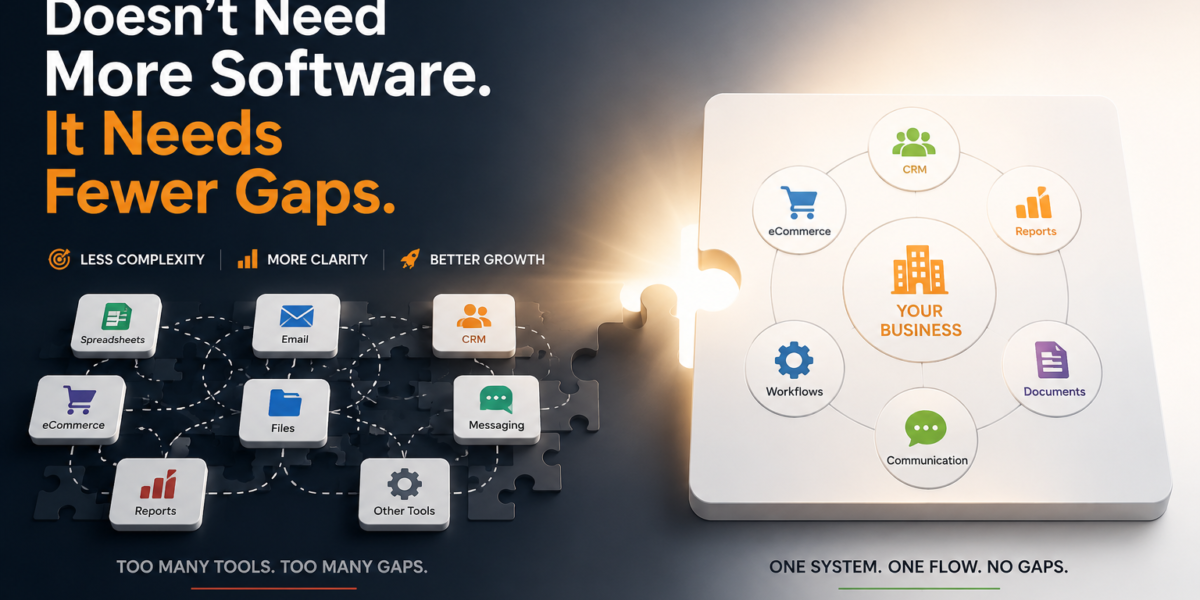
But layering tools on top of fragmented systems rarely simplifies operations.
It increases dependencies.
Now more systems need integration.
More data needs synchronization.
More workflows need monitoring.
Complexity grows faster than efficiency.
The Real Problem Is Fragmented Data Flow
Most operational inefficiencies come down to one thing:
Disconnected flow.
Customer information lives in one system.
Operational updates exist somewhere else.
Reporting pulls from delayed or duplicated data.
And because information isn’t flowing consistently, teams stop trusting systems completely.
That’s when manual verification starts becoming part of everyday work.
Once trust disappears, efficiency follows.
Businesses Rarely Notice The Hidden Cost
The reason this problem grows quietly is because the cost doesn’t appear immediately.
It appears gradually through:
Delayed decisions
Repeated work
Longer execution cycles
Reduced responsiveness
No single moment feels catastrophic.
But over time, the business becomes heavier.
Growth requires more effort than it should.
Simple operations begin demanding unnecessary coordination.
And eventually, scaling feels exhausting.
Good Systems Reduce Friction, Not Just Work
A lot of businesses think technology exists to reduce workload.
That’s partly true.
But the bigger purpose of good systems is reducing friction.
Removing unnecessary waiting.
Reducing dependency chains.
Creating clarity across teams.
When systems work properly, teams spend less energy coordinating and more energy executing.
That shift changes everything.
Why Custom Software Becomes Necessary
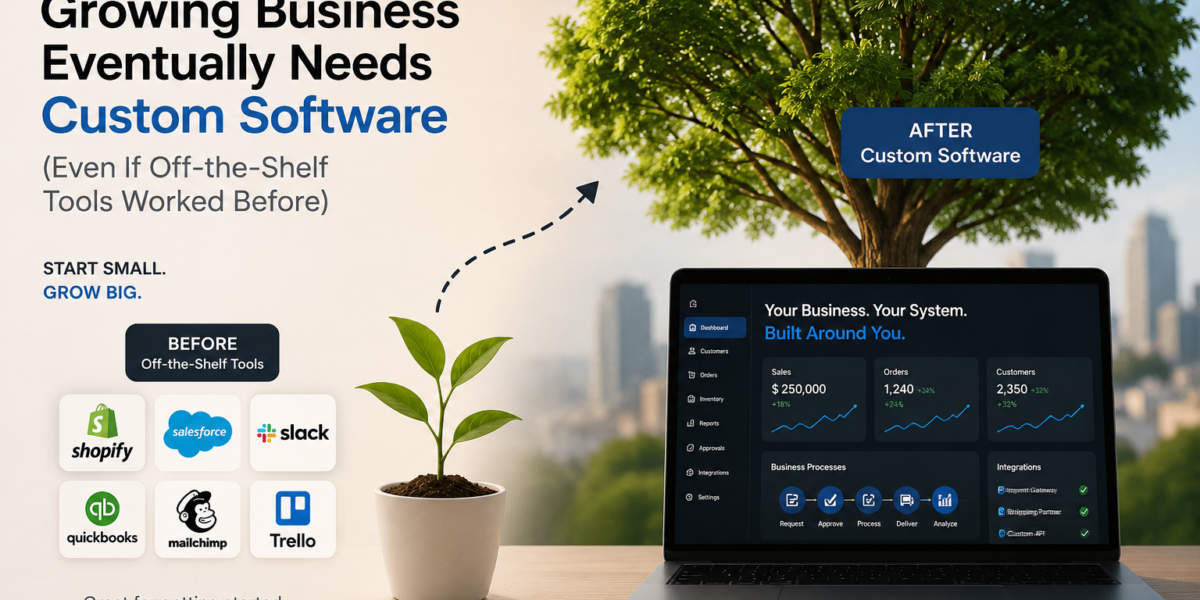
This is where many businesses outgrow generic platforms.
Off-the-shelf tools are designed for broad use cases.
But growing companies develop unique operational patterns.
Different approval structures.
Different reporting needs.
Different workflows.
At some point, forcing the business to adapt to generic software becomes inefficient.
The software starts controlling operations instead of supporting them.
That’s usually the stage where custom system architecture becomes valuable.
What Minterminds Focuses On
At Minterminds, the focus isn’t just building software.
It’s understanding operational flow at a systems level.
How information moves.
Where delays happen.
Where teams rely on manual intervention.
Because once those friction points are visible, technology decisions become much clearer.
Sometimes the solution is integration.
Sometimes automation.
Sometimes rebuilding workflows entirely.
But the starting point is always operational clarity.
Final Thought
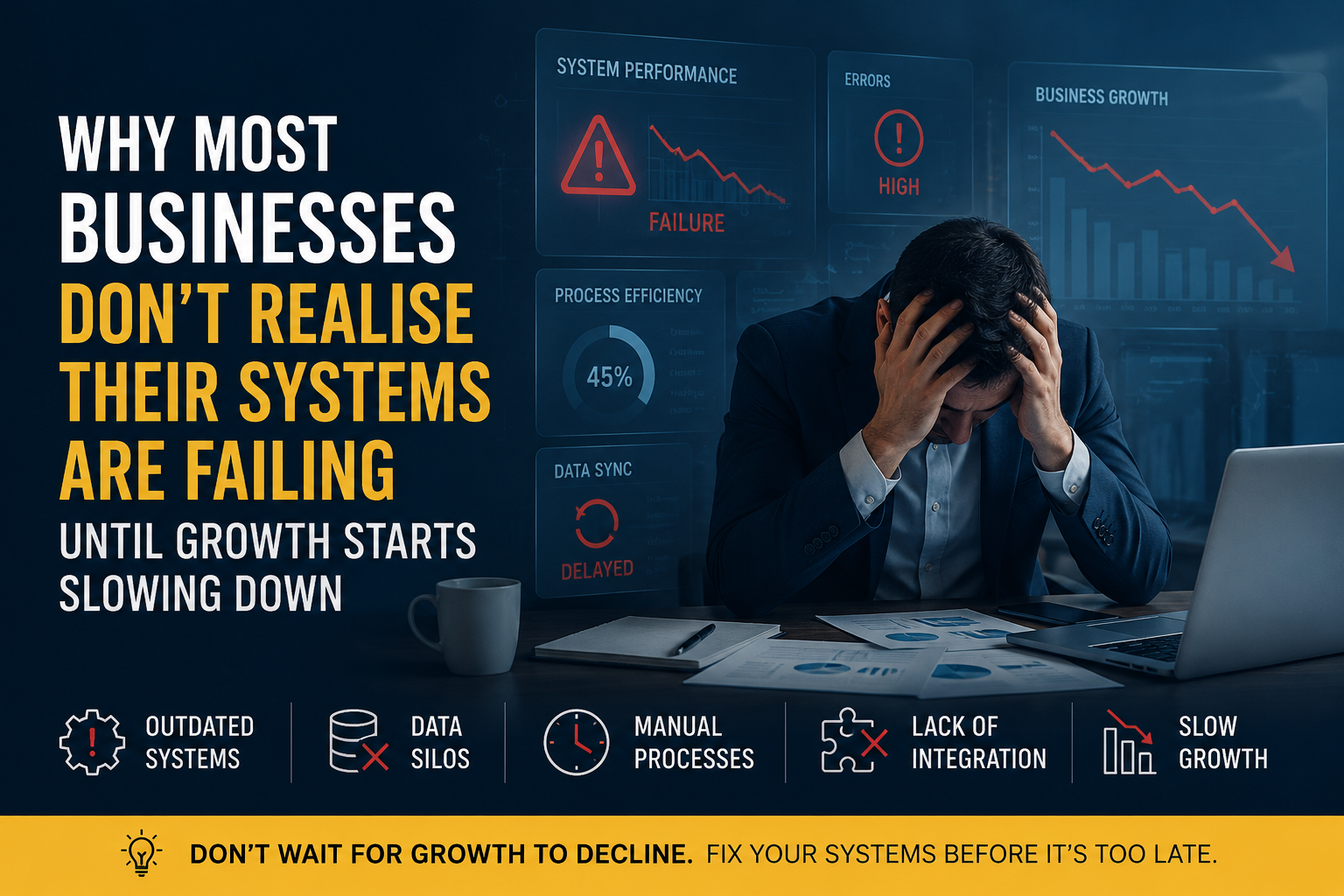
Most businesses don’t realise their systems are failing because nothing visibly breaks.
The signs are quieter than that.
Work becomes heavier.
Execution slows down.
Growth starts requiring disproportionate effort.
And by the time the issue becomes obvious, the operational complexity is already deeply embedded.
That’s why scalable businesses don’t just invest in technology.
They invest in system design.
Because long-term growth depends less on how many tools you have…
and more on how well everything works together.