


Introduction
There’s a phrase that sounds completely harmless inside most companies. “We’ll fix it later.”
It usually comes up in small moments. A process isn’t perfect, but it works. A system has a gap, but the team knows how to manage it. Something feels slightly off, but not enough to stop work.
So the decision feels logical. Keep things moving. Deal with it later. No one argues with it, because at that point, it doesn’t feel like a real problem. And that’s exactly why it becomes one.
It Never Feels Urgent in the Beginning
The reason “we’ll fix it later” is so common is because the issue rarely feels urgent when it first appears. It’s usually something small.
A report that needs a quick manual adjustment. A system that doesn’t sync properly, but only sometimes. A workflow that needs one extra step to confirm accuracy.
Nothing breaks. Nothing crashes. No alarms go off. The business keeps running. And when things are still moving, it’s hard to justify stopping everything to fix something that feels minor. So it gets pushed.
“Later” Quietly Turns Into Routine
The problem is that “later” doesn’t stay in the future. It slowly becomes part of the present. That small workaround someone created? It becomes the default way of doing things. That extra step in the process? It gets repeated every single time. That manual correction? It becomes expected.
What started as a temporary fix begins to settle into the system. And once something becomes routine, it stops being questioned. People don’t ask, “Why are we doing this?” They just do it.
Workarounds Feel Efficient — Until They Don’t
There’s a reason these fixes stick around. They work. At least at first. A spreadsheet makes reporting easier. A manual check prevents errors. A quick message confirms things faster than relying on the system.
In isolation, each of these feels like a smart adjustment. It helps the team move forward. But over time, these small efficiencies start overlapping. Now multiple people are checking the same thing. Data exists in more than one place. Processes depend on manual validation. What once saved time begins to consume it.
The Same Work Starts Happening More Than Once
One of the biggest signs of this problem is repetition. Not obvious repetition, but subtle, layered repetition. Data gets entered in one system. Then rechecked somewhere else. Then copied into another format. Then verified again. No one intends for this to happen.
It’s just the result of systems not fully supporting the process. So people compensate. And compensation, when repeated across a team, turns into duplication.
Growth Doesn’t Create the Problem; It Reveals It
In the early stages of a business, these issues are manageable. The team is small. Communication is direct. Everyone stays close to the work. If something needs fixing, it gets handled quickly. But growth changes that.
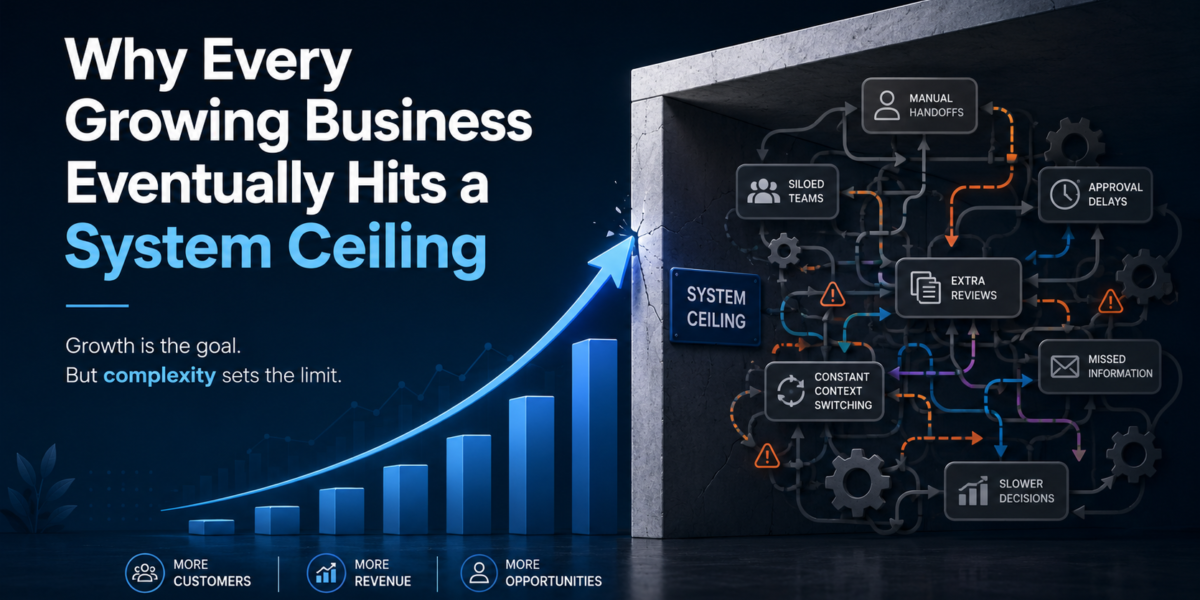
More customers mean more data. More employees mean more coordination. More processes mean more dependencies. And suddenly, those small inefficiencies don’t stay small anymore. They start slowing things down in noticeable ways.
Things Start Feeling Heavier
This is usually when teams begin to feel it. Not as a clear problem, but as a general sense of friction. Work takes longer than it should. Updates require follow-ups. Simple tasks involve more steps.
No one can point to one specific issue. But everyone feels the same thing: “This shouldn’t be this complicated.” That feeling doesn’t come from lack of effort. It comes from structure.
Communication Starts Replacing Systems
When systems don’t fully support the workflow, communication takes over. “Can you send me the latest version?” “Just checking if this is final.” “Let me know once this is updated.” These messages don’t seem like a problem. They’re part of normal work.
But they create dependency. Work moves only when someone responds. And as the team grows, those dependencies multiply. More messages. More follow-ups. More waiting.
Adding More Tools Feels Like the Right Move
At this stage, most businesses try to solve the problem the same way.
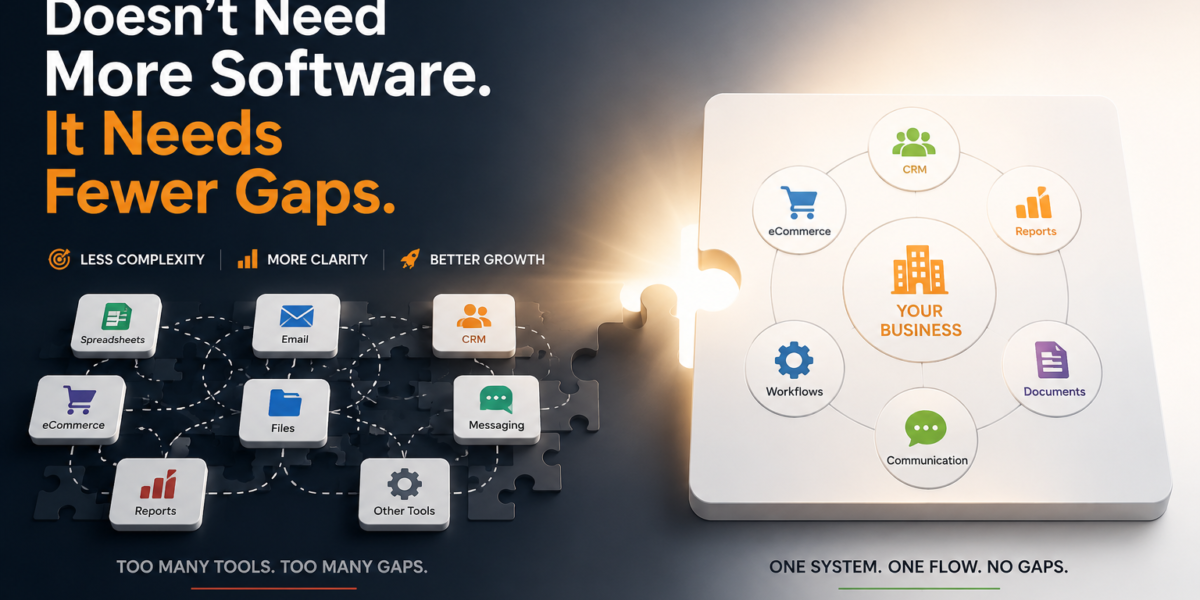
They add something new. A better dashboard. A new system for tracking. An automation tool. It feels like progress. Because something is being done. But if the underlying workflow hasn’t been fixed, the new tool just becomes another layer. Now there are more systems involved.
More data sources to manage. More places where things can go out of sync. Instead of simplifying work, it becomes more complex.
The Real Issue Is Underneath Everything
What often gets missed is that the problem isn’t the tool. It’s how everything connects. How data moves. How tasks flow. How systems interact. If those things aren’t aligned, even the best tools won’t fix the issue.
They’ll just sit on top of it. At Minterminds, this is usually where the focus shifts. Not toward adding more, but toward understanding what’s already there.
Fixing the Flow Changes Everything
The real shift happens when the flow is corrected. When systems reflect how work actually happens. When data updates automatically instead of manually. When tasks move forward without constant validation.
It’s not dramatic. There’s no big moment where everything changes overnight. But the difference is noticeable. Work starts moving again.
You Can Feel When It’s Working
When systems are aligned, something interesting happens. Things get quieter. Fewer follow-ups. Fewer repeated checks. Fewer last-minute corrections. People don’t spend time chasing updates anymore.
They already have what they need. That’s usually the sign. Not when everything looks impressive, but when everything feels easier.
Why Businesses Wait Too Long
Most businesses don’t ignore these issues on purpose. They just get used to them. When something becomes part of the daily routine, it stops feeling like a problem.
It becomes normal. And because everything is still functioning, it’s hard to justify stepping back and fixing it properly. Until the friction becomes too noticeable to ignore.
The Cost Isn’t Immediate: It’s Gradual
The reason this problem is so common is because the cost isn’t obvious. It doesn’t show up as a single failure. It shows up as time. Extra minutes here. Extra steps there. Extra effort everywhere. Individually, it’s small. Collectively, it’s significant.
Final Thought
“We’ll fix it later” sounds like a practical decision. And in the moment, it usually is. But over time, those small delays in fixing things turn into permanent inefficiencies. The system doesn’t break.
It drifts. And that drift slowly makes everything harder than it needs to be. Most businesses don’t need more tools. They need to fix what’s already there, before “later” becomes the way things work.