


Introduction
There’s a point where businesses start asking the wrong question.Things feel slow. Deadlines stretch. Follow-ups increase. And the first thought is usually: “Do we need a better team?” Or sometimes: “Why are things taking so long?”
It’s a fair question. But more often than not, the issue isn’t the people doing the work. It’s how the work moves.
Work Doesn’t Flow the Way It Should
In a well-functioning setup, work moves from one step to the next without much friction. Someone completes a task. It moves forward. The next person picks it up. Simple.
But inside many growing businesses, it doesn’t happen like that. Work pauses. It waits for approvals. It waits for updates. It waits for someone to confirm something. And while it’s waiting, people follow up.
“Did you check this?” “Is this ready?” “Can I proceed?” None of this feels like a big issue in isolation. But when it happens across every task, every day, it slows everything down.
The Same Task Gets Touched Too Many Times
Another thing that quietly affects speed is how many times a task gets revisited. A piece of data gets entered. Then checked. Then adjusted. Then rechecked.
Sometimes by different people. Not because anyone is doing something wrong, but because the system doesn’t give enough confidence the first time.
So people double-check. And then triple-check. Over time, a simple task turns into a chain of small validations.
When Systems Don’t Support the Workflow
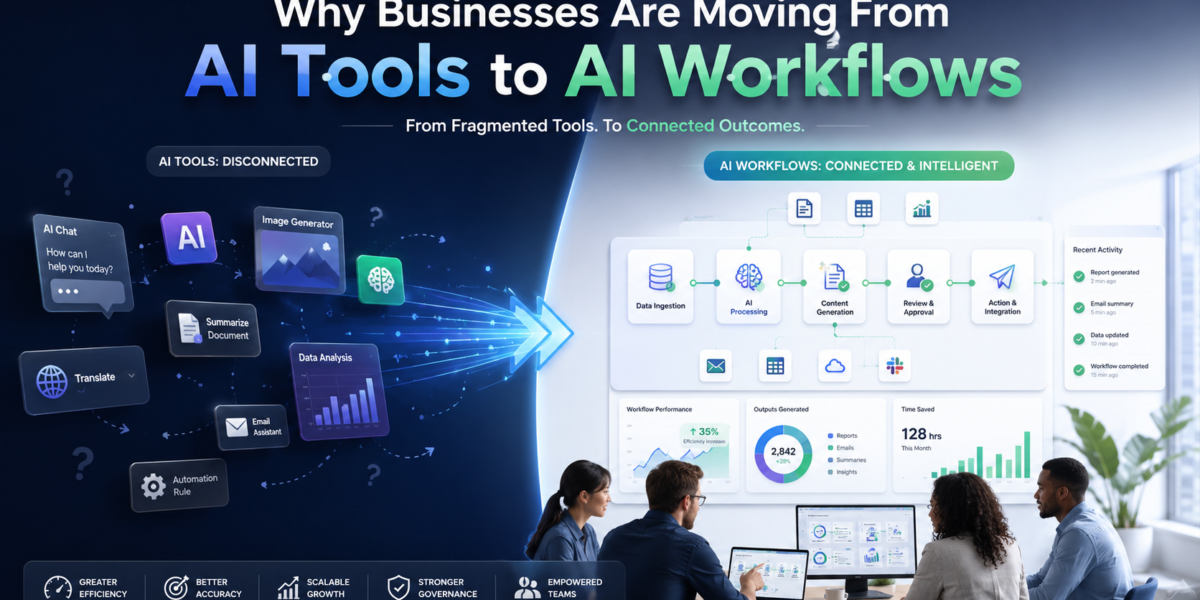
This usually comes back to how systems are set up. Most businesses have tools in place. A CRM. A reporting dashboard. Some project management system. Individually, they work fine. But they don’t always reflect how the business actually operates.
So instead of supporting the workflow, they sit beside it. People still rely on messages, calls, and manual checks to move things forward. The system exists, but the real work happens outside it.
Communication Starts Doing the Heavy Lifting
When systems don’t carry the process, communication takes over. “Sending this for confirmation.” “Just checking if this is final.” “Let me know once updated.” It becomes normal. But it also becomes a dependency. Work only moves when someone replies. And that’s where delays start building up.
Growth Makes the Gaps Harder to Ignore
In smaller teams, this isn’t a huge problem. Everyone is close to the work. Updates happen quickly. Gaps get filled naturally. But as the business grows, those gaps widen. More people are involved. More data moves through the system. More decisions depend on accuracy.
And suddenly, what felt manageable starts feeling chaotic. Not because the business is doing badly. But because the structure hasn’t kept up with the scale.
Fixing the Flow Changes Everything
The biggest shift doesn’t usually come from adding something new. It comes from fixing how work moves. Making sure data flows without manual effort. Making sure tasks don’t need repeated validation.
Making sure systems actually reflect the real process. At Minterminds, this is often where things start improving. Not by introducing complexity, but by removing friction.
When Things Start Clicking
You can tell when the flow is right. Work feels smoother. There are fewer follow-ups. Fewer repeated checks. Fewer “waiting” moments.
People don’t need to ask for updates, they already have them. And that changes how the entire business feels.
Final Thought
When things slow down, it’s easy to look at the team. But most of the time, the team is doing exactly what they can with what they have.
The real issue is how work is structured underneath. Once that improves, everything else starts moving the way it should. And that’s usually the turning point.