

Walk into almost any growing company and you’ll hear the same sentence at least once.
“Let’s find a tool for this.”
Need better reporting? Buy a dashboard.
Need customer management? Buy a CRM.
Need project tracking? Add another platform.
On paper, it feels like progress. Every problem gets its own solution. But after a year or two, something unexpected happens.
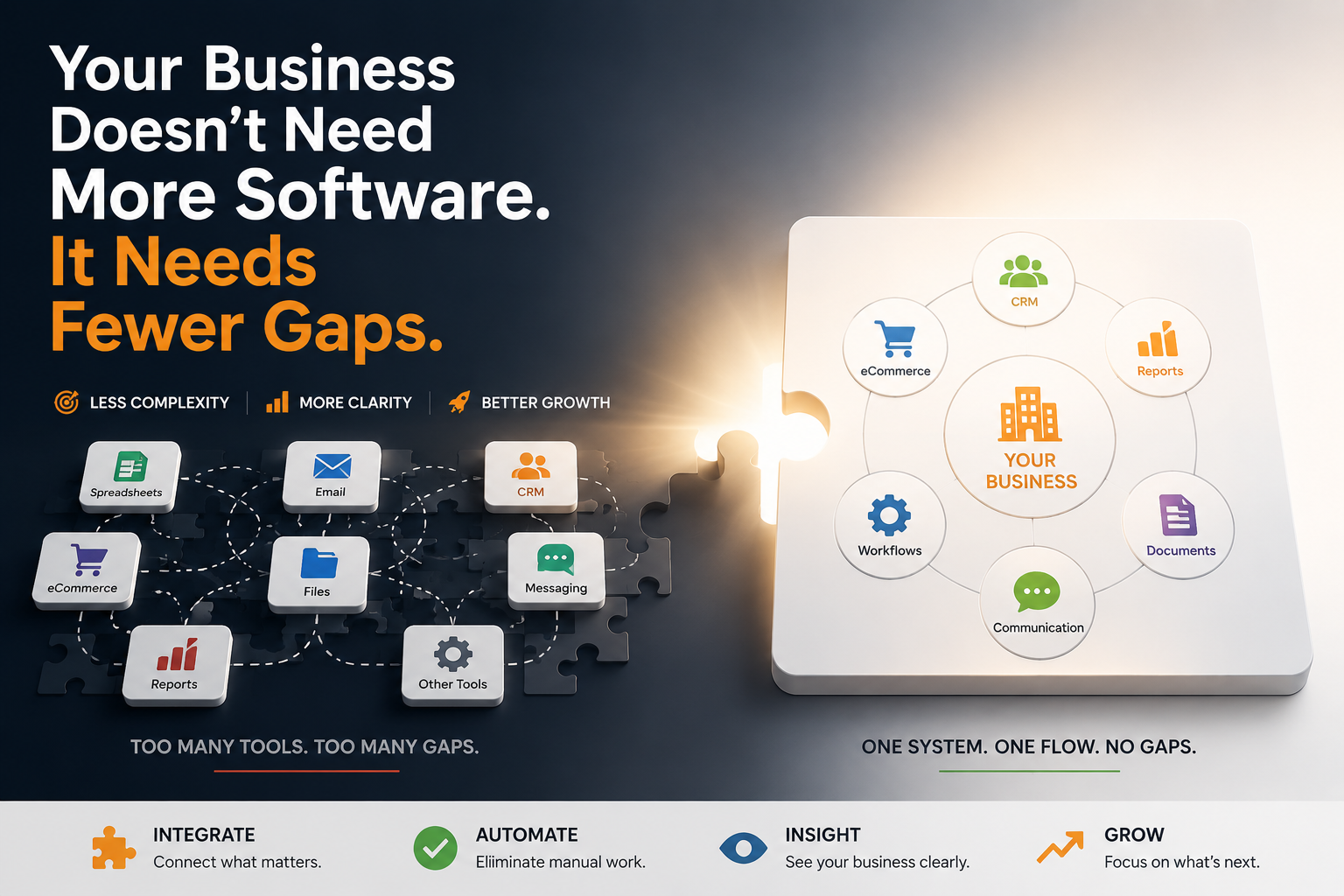
The business has ten different tools…and one very familiar problem. Nobody has the complete picture.
The Real Problem Isn’t Missing Software
Here’s something we see surprisingly often.
Businesses aren’t struggling because they don’t have technology.
They’re struggling because every department has its own version of reality.
Sales says the project has started. Operations says they’re still waiting for approval. Finance hasn’t even received the customer details yet.
Who’s right? Usually… everyone. Because every team is looking at a different system.
Technology Should Reduce Questions
Think about how many questions get asked during a normal workday.
“Has the client approved it?”
“Did the payment come through?”
“Who updated the status?”
“Can someone send me the latest file?”
Now imagine if nobody needed to ask those questions.
Not because communication disappeared. Because the system already knew the answer. That’s what good software actually does. It reduces uncertainty.
Most Businesses Build Around Departments
Software projects often begin with departmental thinking. Sales needs this. HR needs that.
Finance wants another feature. Operations needs a dashboard. Individually, every request makes sense. But businesses don’t operate department by department.
They operate process by process.
A customer doesn’t care which team is responsible. They care whether things happen smoothly.
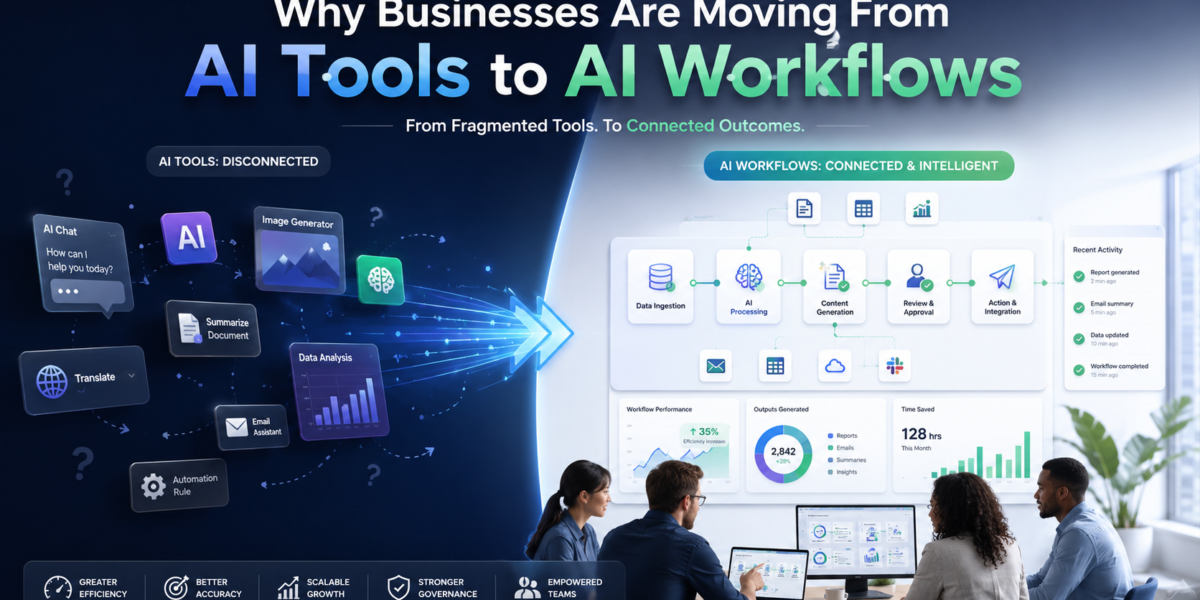
Workflows Matter More Than Features
A feature can look impressive during a product demo.
But six months later, nobody remembers the feature. People remember whether work became easier.
Did approvals speed up? Did duplicate work disappear?
Did customer updates happen automatically? That’s where software creates real value. Not through feature lists.
Through better workflows.
Every Manual Step Is Trying To Tell You Something
Manual work isn’t always bad. Sometimes it’s necessary. But repeated manual work usually points to a system problem.
If someone copies the same information into three different applications every day…
That’s not a disciplined employee. That’s an inefficient workflow.
If managers constantly ask for status updates… That’s not a communication issue. That’s a visibility issue.
Businesses often try to solve these problems with more meetings.
Technology should eliminate the need for those meetings in the first place.
Growth Makes Small Problems Impossible To Ignore
A manual process that takes two minutes isn’t a big deal.
Until it happens 500 times a day. That’s why scaling changes everything.
The shortcuts that helped a startup move quickly become bottlenecks for a growing company.
The spreadsheet that once felt convenient becomes impossible to maintain.
The approval process that worked with five employees becomes frustrating with fifty.
Growth doesn’t create problems. It exposes them.
Building Software Isn’t About Writing Code
People often think custom software development begins with programming.
It doesn’t. It begins with questions.
How does work actually move through the company? Where do people wait? Where does information get stuck? Which decisions take longer than they should?
Only after understanding those answers does technology become meaningful.
Otherwise, you’re simply digitising inefficient processes.
The Best Software Is Easy To Forget
There’s an interesting pattern in well-designed systems.
People rarely talk about them. Nobody says,
“The software worked today.” They simply get on with their work.
Because everything happens quietly in the background. Approvals move. Notifications trigger.
Data updates. Reports generate. No chasing. No guessing. No constant checking. The software becomes invisible.
And that’s probably the biggest compliment a business system can receive.
Why Minterminds Looks Beyond The Code
At Minterminds, building software isn’t just about developing applications.
It’s about understanding how businesses actually function.
Technology should fit around the business; not force the business to change for technology.
That means looking beyond features and focusing on flow.
How people work. How information moves. How decisions happen.
Because once those pieces connect properly, software stops feeling like another tool.
It becomes part of how the business thinks.
Final Thoughts
Businesses rarely lose momentum because they lack ideas.
More often, they lose momentum because work becomes harder than it needs to be.
More systems. More updates. More coordination. More waiting. The solution isn’t always another platform.
Sometimes it’s stepping back and asking a much simpler question:
“Where is work getting stuck?”
Because once you solve that… Technology finally starts doing what it was meant to do.