




There’s a point most growing businesses reach where things start to feel… heavier. Not broken. Just slower than they should be. Tasks take longer. Teams keep following up with each other. Data doesn’t match across reports. Small things begin to pile up. And the first instinct is usually the same: “Maybe we need a better tool.” So another platform gets added. A new CRM. A reporting dashboard. An automation tool. For a few weeks, it feels like progress. Then things go back to feeling exactly the same. On paper, most businesses already have everything they need. A system for sales. Something for finance. Tools for marketing. A way to manage projects.
Overview
Tasks take longer. Teams keep following up with each other. Data doesn’t match across reports. Small things begin to pile up. And the first instinct is usually the same: “Maybe we need a better tool.” So another platform gets added. A new CRM. A reporting dashboard. An automation tool. For a few weeks, it feels like progress. Then things go back to feeling exactly the same.
On paper, most businesses already have everything they need. A system for sales. Something for finance. Tools for marketing. A way to manage projects.
Individually, these tools work well. That’s not the issue. The problem is what happens between them. Data doesn’t move smoothly. Updates don’t reflect everywhere.
Teams end up checking things manually just to be sure. So even though the company is “digitally equipped,” the actual work still feels fragmented.


Key Insights
On paper, most businesses already have everything they need. A system for sales. Something for finance. Tools for marketing. A way to manage projects.
Individually, these tools work well. That’s not the issue. The problem is what happens between them. Data doesn’t move smoothly. Updates don’t reflect everywhere.
Teams end up checking things manually just to be sure. So even though the company is “digitally equipped,” the actual work still feels fragmented.
On paper, most businesses already have everything they need. A system for sales. Something for finance. Tools for marketing. A way to manage projects.
minterminds
Final Thought
Learn more with Minterminds.

Related posts

Technology / Business
Industry / Technology
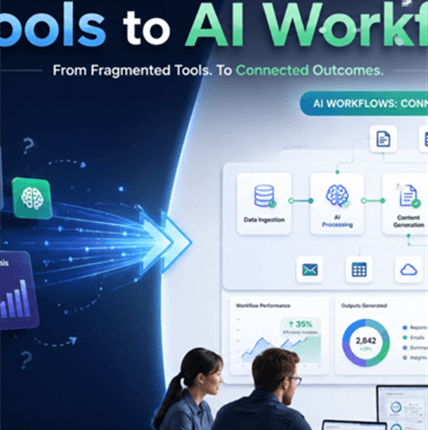
Why Businesses Are Moving From AI Tools to AI Workflows
Softwares / Technology